
Table of Contents

The first cold night of the year finds every weak point in a compressed air system. A drain freezes. Water turns up in a tool. A machine that started cleanly in August struggles at six on a November morning.
That is not bad luck. Air compressor cold weather problems are predictable, and nearly all of them trace back to one fact: cold air holds less water than warm air. Your system was set up and signed off in milder weather. Winter moves the goalposts.
Here is what changes, why it goes wrong, and the checks worth doing now.
Cold air cannot hold as much water
Your compressor breathes in air from the room. That air carries water vapour. Compressing it squeezes the same water into a much smaller space, so it drops out as liquid. That liquid is condensate, and a normal system makes a surprising amount of it.
A dryer takes most of it out. How much it takes out is described by the pressure dew point, or PDP. That is the temperature you can cool the compressed air to before water starts condensing again.
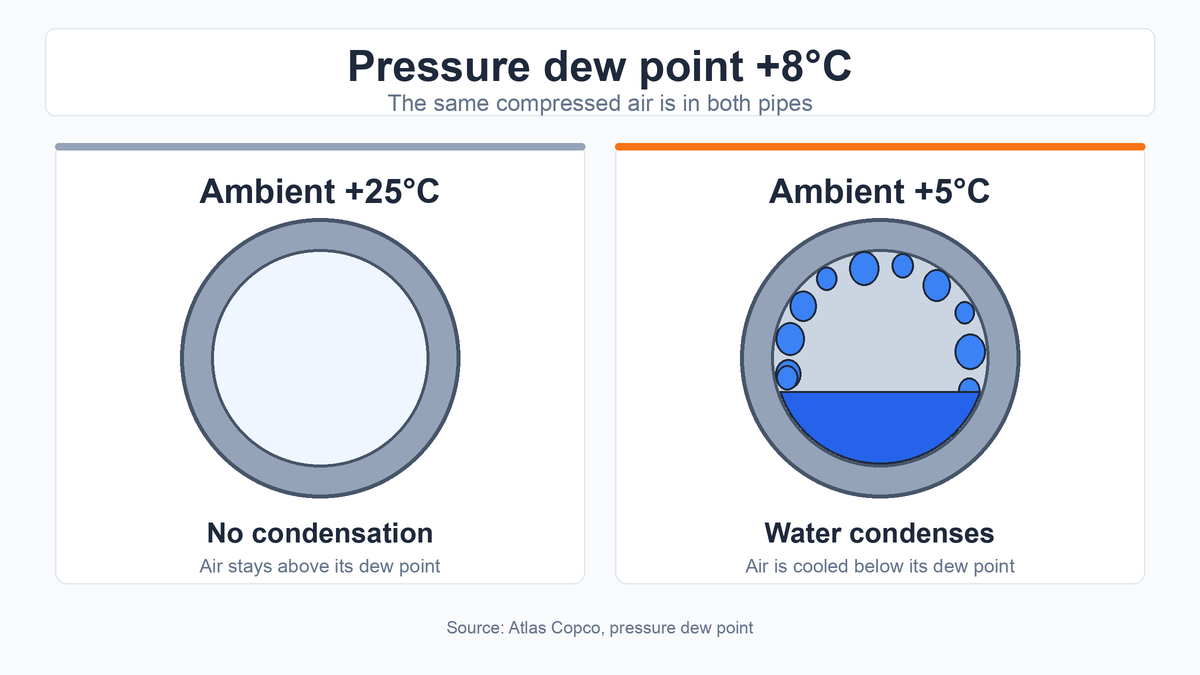
Here is the bit most sites miss. A dew point that works all summer can fail in winter. Atlas Copco gives a clean example: a pressure dew point of +8°C stops condensation in a pipe sitting in an ambient temperature of +25°C, but that same +8°C dew point will condense in the pipe at an ambient of +5°C.
Nothing changed inside the dryer. The weather changed. So the rule is simple. Your dew point has to sit below the coldest temperature your pipework will ever see.
Problem 1. Condensate freezes in drains and low points
Condensate gathers at the bottom of receivers, in filter bowls, in drain legs and in any dip in the pipework. In a plant room that drops below freezing, that water becomes ice.
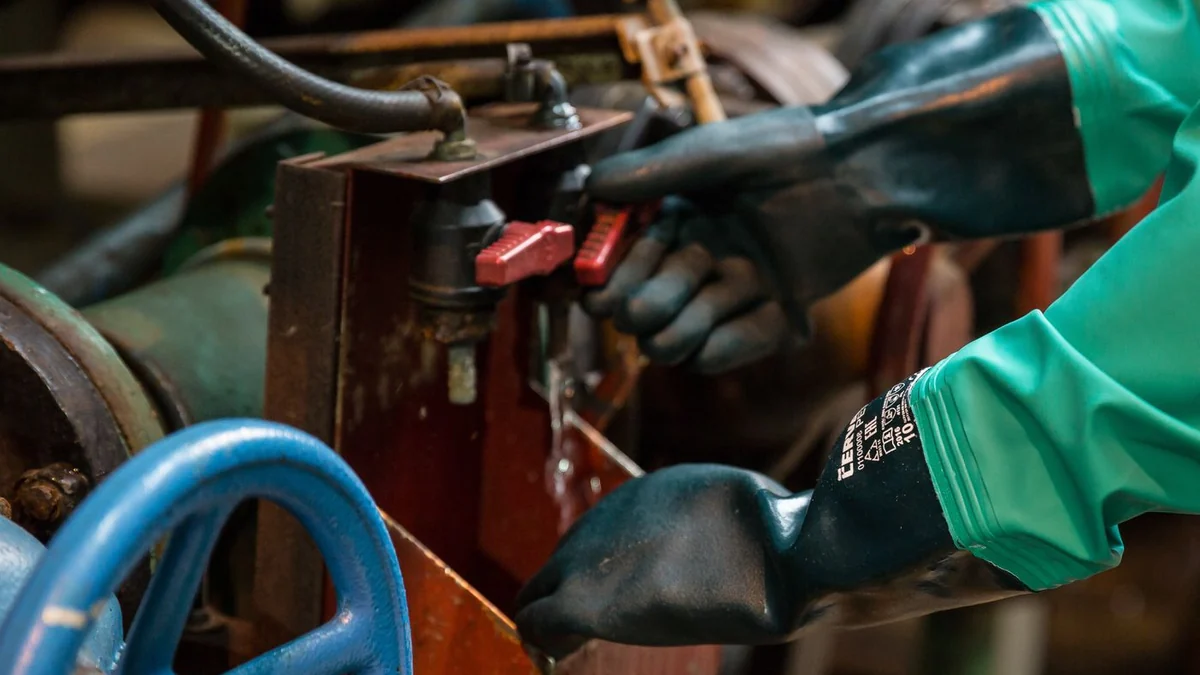
A frozen drain does three things to you:
- It stops draining. Water backs up into the pipe instead of leaving the system, so the air downstream gets wetter.
- The ice expands. Atlas Copco lists freezing in cold weather among the ways excess moisture damages a system, including damage to control lines. Automatic drains, plastic filter bowls and small bore control pipe are the usual casualties.
- You find out late. A split drain leg often only shows itself as a leak once the ice thaws.
Outdoor and unheated runs suffer worst. So do drain legs on an external wall, and anything in a loading bay that has the doors open all day. Our guide to condensate management covers what a healthy drain setup should look like.
Problem 2. The dryer is specified for the wrong season
ISO 8573-1 sorts compressed air into water classes by pressure dew point. Three of them cover most industrial sites:
| Class | Pressure dew point |
|---|---|
| 4 | +3°C or lower |
| 3 | -20°C or lower |
| 2 | -40°C or lower |
A refrigerated dryer is the common choice on UK sites, and it handles moderate dew points well. For very low dew points you need a desiccant dryer. Atlas Copco puts it plainly: apply refrigerated air dryers for moderate dew points, or desiccant dryers for extremely low pressure dew points.
A refrigerated dryer cannot take you to a sub-zero dew point. It works by chilling the air so water condenses out, and it has to stop short of freezing that water inside itself. So if your pipework runs outdoors, through an unheated store, or across a cold roof space, a Class 4 dew point will not carry you through winter.
That is a specification problem, not a maintenance problem. No amount of servicing fixes it. How to dry compressed air walks through the options.
Problem 3. A cold plant room makes hard work of start-up
Oil thickens as it gets colder. On a cold start the compressor has to turn an air end full of thick oil, which loads the motor and the drive harder than normal. Some machines will not start at all below a set ambient temperature. Your manual gives that figure, and it is worth finding before January.
Atlas Copco recommends holding a compressor room at roughly 10°C to 29°C, so components neither freeze nor overheat.
If your plant room drops below your machine’s minimum on a cold morning, you have two honest options. Heat the room, or fit the manufacturer’s cold weather package.
Two cheap mistakes to avoid:
- Closing the vents to keep the room warm. The compressor still needs air to breathe and to cool itself. Blocking ventilation swaps a winter problem for a worse summer one.
- Leaving the machine off through a cold weekend and expecting a clean Monday start.
Planned compressor servicing is the cheapest way to go into winter with fresh oil, a good separator and clean filters.
Problem 4. Wet air reaches your tools and your product
When the dryer is outmatched, the water travels. It arrives as a slug in an air line or a mist at the tool.
What that costs you:
- Rust in pipework and in tools. Air motors and cylinders wear faster than they should.
- Sticking valves and actuators. These stop a line, not just a tool.
- Ruined finishes. Water in a paint or coating line shows up as poor adhesion and patchy colour.
- Failed air quality tests. If you work to ISO 8573-1 for food, drink, pharmaceutical or breathing air, a winter dew point excursion is a compliance problem, not just an annoyance.
Waterlogged and undersized pipe also costs you pressure, which people usually blame on the compressor.
If you already see water at the point of use, do not fit a bigger filter and hope. Find out what dew point you are actually getting. Air treatment is a chain, and one weak link soaks everything after it.
Your pre-winter checklist
Work through this before the first hard frost. Most of it takes an afternoon.
- Test every automatic drain. Trigger each one by hand and watch it discharge. A drain that quietly failed in July becomes an ice plug in December.
- Empty and inspect filter bowls. Look for standing water, and for cracks in plastic bowls.
- Walk the whole pipe route. Note every metre that runs outdoors, on an external wall, through an unheated store or across a roof space. That walk sets the dew point you actually need.
- Read the dew point at the dryer. If there is no gauge or sensor to read, that is the first thing to fix.
- Take the plant room temperature on a cold morning, not a mild afternoon. Compare it with the minimum ambient in your compressor manual.
- Check ventilation and louvres still work. You need them in summer as much as you need them shut tight in winter.
- Lag exposed drain legs and short outdoor runs. Use trace heating where lagging is not enough.
- Book the service you have been putting off. Oil, separators and filters all work harder cold.
- Look for leaks while you are down there. Our ultrasonic leak surveys typically find 20 to 30% of output going to waste, and a leaking joint is also a cold spot where water likes to sit.
When to get an engineer in
Do the drains, the bowls, the walk round and the thermometer yourself. Get help when:
- You have water at the point of use and no dew point reading to work from.
- The pipework runs outdoors and you are not sure what class of air you need.
- Your plant room sits below the minimum ambient in the manual and you do not know the options.
- A drain, dryer or control line has already frozen and split once.
If something has already failed, our breakdown and repair team runs a 24/7 line.
The short version
Cold air changes the dew point you need. Your dryer, your drains and your plant room were almost certainly set up for milder weather than the one coming. Test the drains, read the dew point, and check the plant room against your manual.
Do it before the frost, not after the breakdown.