
Table of Contents
Your compressor keeps starting and stopping. Every few minutes, all shift. The plant room sounds busy, so nobody worries. Then a motor fails, or a contactor burns out, and the line stops.
That pattern has a name. It is called short cycling. And the compressor is often not the thing that is broken. The storage is.
This post explains air receiver sizing in plain terms. What a receiver does, how big yours should be, and how to tell in an afternoon whether yours is too small.
What an air receiver actually does
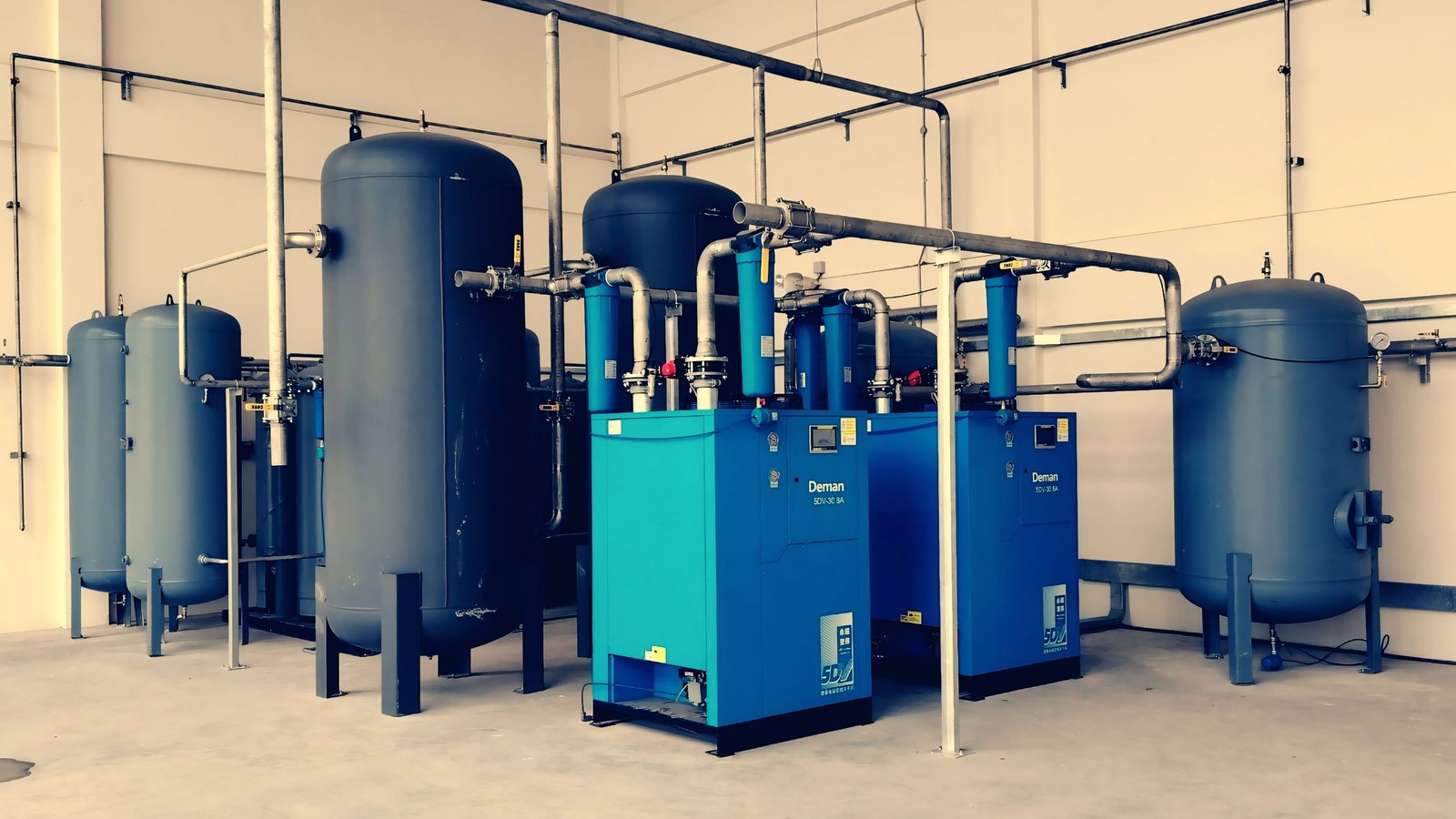
An air receiver is the tank next to your compressor. Some sites call it the air tank or the pressure vessel. It does three jobs.
- It stores air for peaks. When a shot blaster or a packing machine takes a big gulp, the receiver covers it. Without that buffer, the compressor has to cover the gulp on its own.
- It steadies the pressure. Stored air smooths out the swings, so the pressure at the tool stays where you set it.
- It cools and drops out water. Air slows down inside the tank. It cools. Water drops out and goes to the drain instead of down your pipework.
Atlas Copco describe a receiver as “a buffer mechanism between the compressor and the fluctuating pressure caused by changing demand”. That is the whole idea. It is a shock absorber for air.
What short cycling costs you
A fixed speed compressor works in a pressure band. It loads at the bottom of the band and unloads at the top. With enough storage, that cycle is long and calm. With too little storage, the band gets crossed in seconds and the machine hammers away all day.
Three things go wrong when it does.
Motors wear out. Every start pulls a big inrush of current. Manufacturers set a limit on starts per hour for exactly that reason. Break the limit day after day and you shorten the life of the motor, the starter and the contactors.
You burn energy for nothing. A loaded and unloaded compressor still draws power when it is unloaded. It is spinning and producing no useful air. More cycles means more of that dead time.
Your pressure wanders. Tools and machines see a moving target. Operators respond the way operators always do. They wind the system pressure up. Now the whole site runs at a higher pressure, which costs more again.
None of that is small money. The Carbon Trust reports that compressed air “accounts for around 10% of UK industry’s electricity consumption”, and that UK businesses could save up to £110m a year through simple low and no cost actions. Storage is one of the simplest.
Air receiver sizing: the starting number
Here is the rule most engineers use.
Allow around 10 litres of receiver volume for every litre per second of compressor output.
So a compressor delivering 50 l/s pairs with a 500 litre receiver. That number comes straight from our own Compressed Air System Design Guide, and Atlas Copco publish a similar range of 10 to 15 litres per litre per second.
Treat it as a starting point, not an answer. Three things move it.
- Your demand profile. A steady load needs less storage than a site with big, sudden draws.
- Your control method. A load and unload compressor needs more storage than a variable speed drive unit, because the VSD ramps instead of switching.
- Your acceptable pressure band. A tight band eats storage. A wider band buys you time.
If you do not know your real demand, start there. Our compressed air usage calculator gives you a first estimate from the kit on your floor. Better still, get the system data logged over a normal week so you are working from measurements, not memory.
Wet, dry, or both
Where the receiver sits matters as much as how big it is.
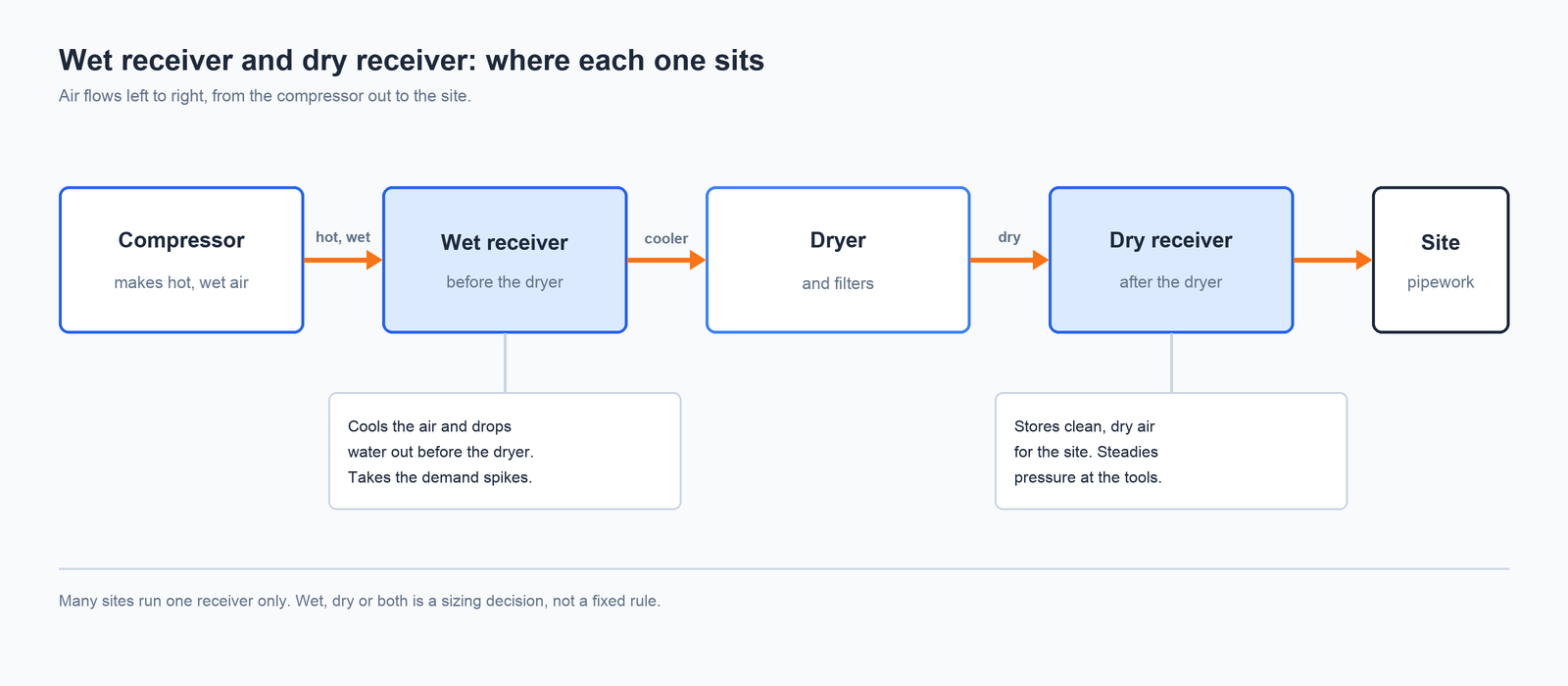
A wet receiver goes between the compressor and the dryer. Air arrives hot and damp. The tank cools it and drops water out before the dryer sees it, which lightens the dryer’s work.
A dry receiver goes after the dryer. It stores clean, dry air ready for the site.
Plenty of sites do best with both. A smaller wet receiver up front, a larger dry receiver behind it.
Remote receivers for big, occasional demands
If one machine causes the trouble, fix it where it happens. A shot blast cabinet, a paint booth or a blow moulder can pull the whole site down for a few seconds every cycle.
Put a small receiver next to that machine. It fills slowly between uses and covers the peak locally. The rest of the plant never feels it. This is usually far cheaper than adding compressor capacity, and it removes a common cause of compressed air pressure drop at the far end of a system.
Four checks you can do this week
You do not need a survey to spot an obvious storage problem.
- Count the starts. Stand in the plant room for ten minutes and count how many times the compressor loads. If it is more than once a minute, something is wrong.
- Read the nameplate. Note the receiver volume in litres and the compressor output in l/s. Do the sum above. See how far off you are.
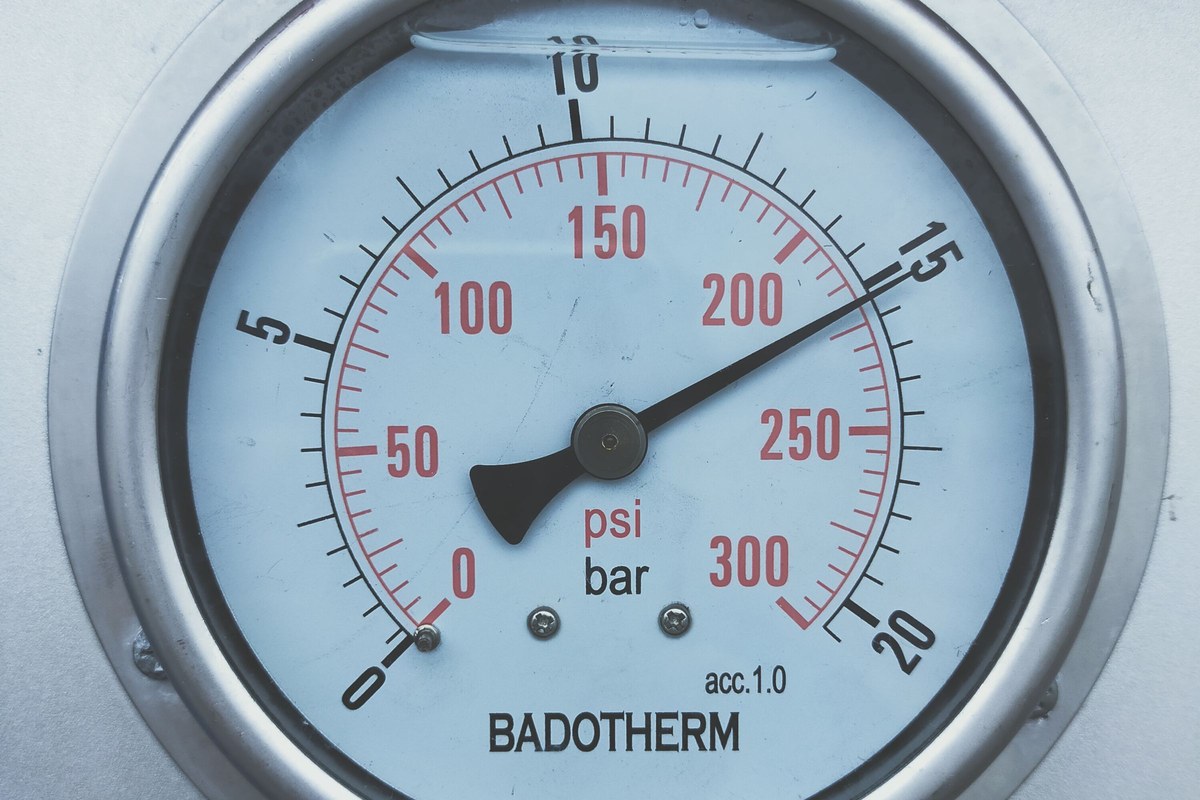
- Watch the gauge during a peak. Run the machine that causes trouble. If site pressure dives and takes a while to recover, you are short of storage, pipe bore, or both.
- Check the drain. A receiver full of water is a smaller receiver. If the automatic drain has failed, you may have lost a chunk of your storage without knowing.
Any of those four pointing the wrong way is worth a proper look.
Do not forget the paperwork
An air receiver is a pressure vessel. On a UK site it falls under the Pressure Systems Safety Regulations 2000. That means a written scheme of examination, examination by a competent person at the intervals the scheme sets, and a safety valve that works.
If you add a receiver, or move one, the written scheme has to keep up. Our PSSR compliance service covers the scheme, the examinations and the records, and our PSSR compliance guide explains what the regulations ask of you.
Position matters here too. Leave room to get at the vessel for examination, and make sure the condensate drain can discharge properly.
What good looks like
A well sized system is boring, and that is the point.
- The compressor loads and unloads on a long, steady cycle.
- Site pressure holds through the worst peak of the day.
- The drains run clear and the dryer is not fighting a flood.
- The written scheme matches the kit that is actually installed.
If your plant room does not look like that, the fix is often storage and pipework, not a new compressor. It is worth checking before you spend.
Air-Mech has been sorting out compressed air systems for over 45 years, across more than 100,000 service visits. If yours is cycling and you want a straight answer, talk to our engineers or call 024 7634 5658.