
Table of Contents
Your electricity bill went up again. Someone in the meeting asked what the compressors cost to run. Nobody had a number.
That is the normal position on most UK sites. The compressors run, the bill gets paid, and nothing gets measured. An audit fixes that. For a single compressor site with straightforward pipework, the compressed air energy audit cost is typically £800 to £1,500. What you get back is a measured figure for what your system uses, where the waste goes, and what each fix would save.
Here is what the audit measures, what lands on your desk, and how the price stacks up against the savings.
Compressed air costs more than most sites think
The Carbon Trust puts compressed air at around 10% of UK industry’s total electricity use. The same research says UK businesses could save up to £110 million a year by making simple low cost and no cost changes.
The waste is rarely dramatic. It is small, constant, and invisible on an invoice:
- Leaks. A single 3mm hole can cost about £1,000 a year in electricity, according to the Carbon Trust. Most sites have more than one hole.
- Pressure set too high. Cutting system pressure by 10% cuts energy use by about 5%. Plenty of sites run at 8 bar to feed tools that need 6.
- The wrong size machine. A compressor sized for the demand profile of ten years ago will not match today’s shift pattern.
- Idle running. A fixed speed machine that unloads but keeps spinning still draws power at night and at weekends.
Our own ultrasonic leak surveys typically find 20 to 30% of output going to waste.
None of that shows up on your bill as a separate line. It only shows in the data, and only if someone logs it.
What the audit measures
Our compressed air energy audit is measurement first, recommendations second. Four steps.
1. System survey. We walk the site and record every compressor, dryer, filter, receiver and distribution run. Nameplates, control settings, pipework sizes, point of use connections. Half a day for a single compressor site. A full day for a larger multi-compressor system.
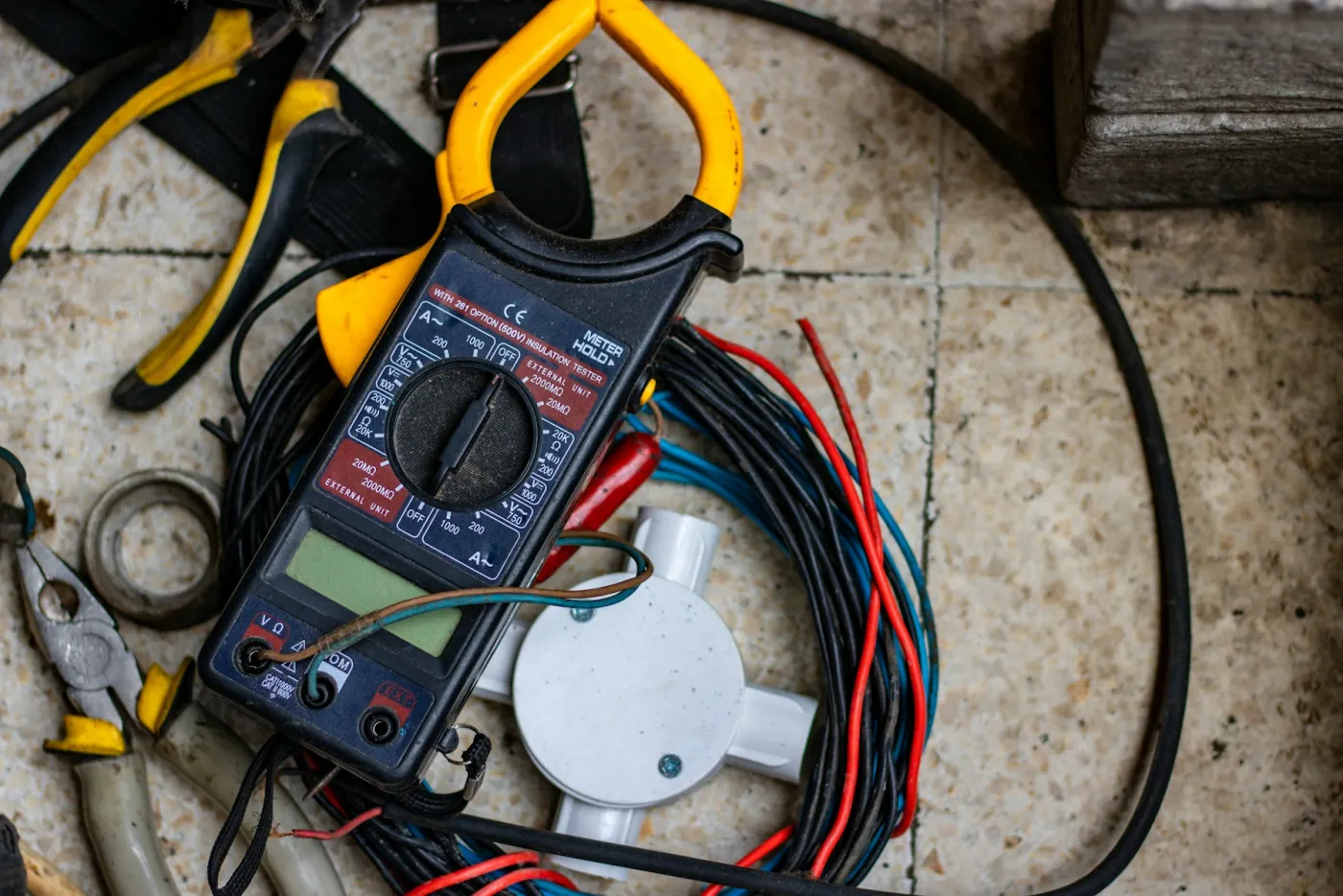
2. Data logging. We fit loggers to every compressor for a minimum of seven days. They record power consumption, system pressure, load and unload cycles and ambient conditions at one second intervals. Seven days covers your real production pattern, including nights and weekends. Not a quiet Tuesday afternoon.
3. Leak survey. Ultrasonic detection across your whole distribution system. Every leak is tagged, photographed and quantified in litres per second, then converted to an annual energy cost so you can rank repairs by payback.
4. Report and recommendations. Delivered within 48 hours of the loggers coming off.
The loggers clamp onto power cables and pressure lines. No shutdown. No isolation. No interruption to your air supply. The leak survey runs alongside normal production. If you want the background on how logging works, read our guide to compressed air data logging.
What you get at the end
The report is built to be used, not filed. It contains:
- A system schematic
- Your measured demand profile, drawn from real data
- An energy consumption breakdown, compressor by compressor
- A leak register with locations and annual costs
- A prioritised list of recommendations

Every recommendation carries three things: estimated saving, cost to implement, and simple payback period. Quick wins that pay back in weeks sit separately from capital projects that pay back in months. So you can start saving while the bigger business case goes through approval.
Two things worth knowing before you book.
We are brand agnostic. If the data says your existing kit is the right size and type, we say so. If it says a machine we do not sell is the best fit, we say that too.
And there is no obligation to use us for the remedial work. Your own maintenance team can action the quick wins if you would rather. The audit is about your energy bill, not our order book.
What does a compressed air energy audit cost?
It depends on how many compressors you run and how complex your pipework is.
A single compressor site with straightforward pipework typically costs between £800 and £1,500. Multi-compressor installations and multi-site audits are quoted individually. We give you a fixed quote after an initial phone consultation, so there are no surprises.
Now set that against what the audit finds. Across the audits we run, we typically identify between £5,000 and £50,000 a year in savings. At the bottom of that range, a £1,500 audit is paid back in about sixteen weeks of savings. At the top, in under a fortnight.
That is why the question is rarely what the audit costs. It is what another year of guessing costs.
A worked example
Look at Flying Spares. That was an installation project rather than an audit, but the principle is the same: match the equipment to measured demand and the bill falls. They moved from an 11kW fixed speed compressor to an 18.5kW variable speed machine. Nearly double the capacity. They still saved 4,322 kWh and £1,729 a year on energy.
Bigger system. Smaller bill. That only happens when someone measures first.
Want a rough figure before you commit?
Our energy savings calculator gives you a ballpark in a couple of minutes. It is an estimate, not a measurement. The audit is what turns it into a number your finance team will accept.
Book your compressed air energy audit
Tell us how many compressors you run, roughly what size they are, and how many sites you cover. We will come back with an audit scope and a fixed price.
Request your energy audit quote
One form. No obligation to act on the findings. Just the numbers you have been asked for.