
Table of Contents
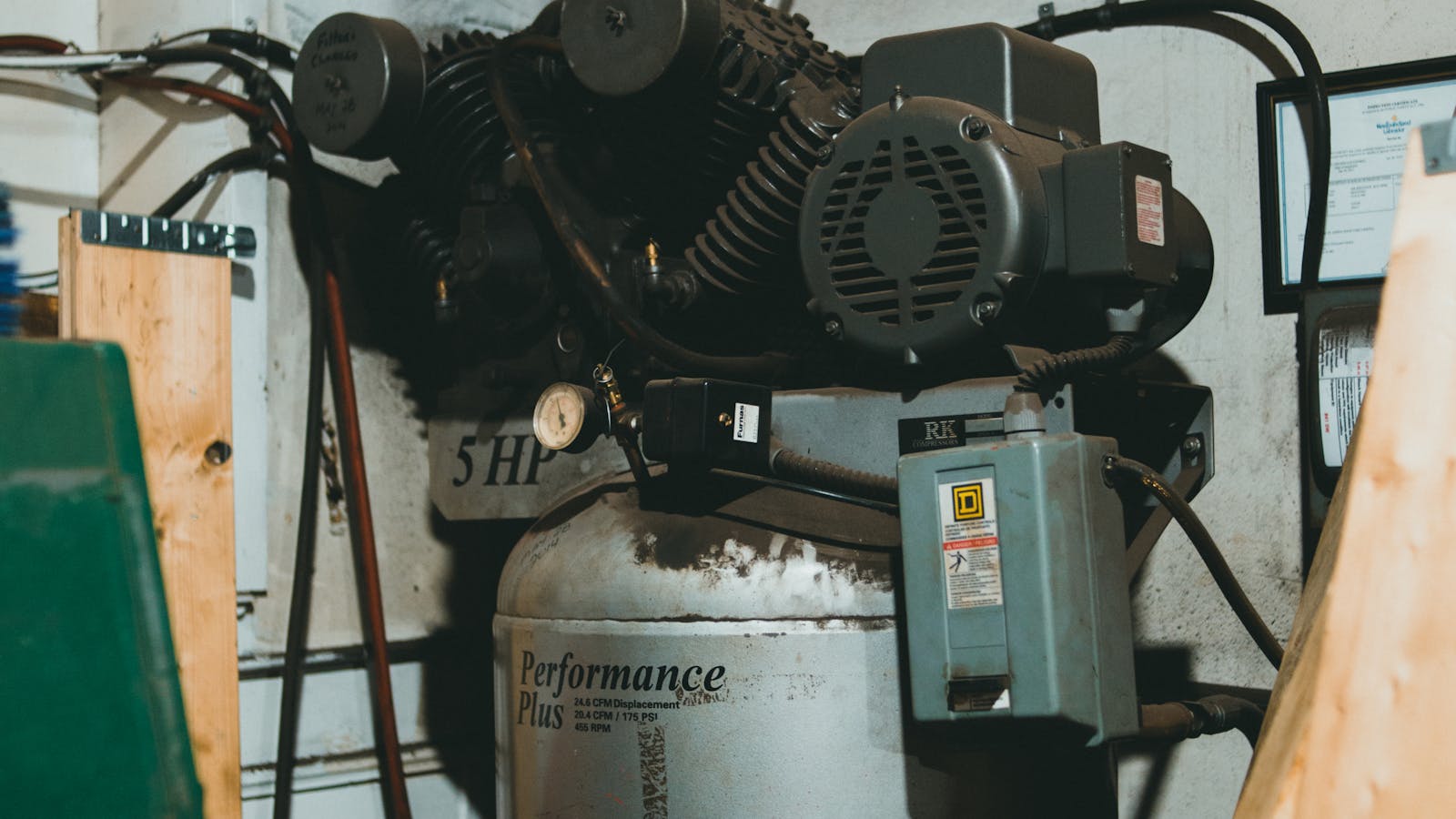
Your compressor runs all day. But up to a third of the air it makes never reaches your tools. It leaks out of joints, hoses, and fittings you cannot hear. Money leaks out with it.
Compressed air leak detection is how you find those leaks and stop the waste. This guide shows you the warning signs, the simple checks you can do today, and what a proper survey looks like. No sales pitch. Just the facts you need to act.
Why compressed air leaks cost so much
Compressed air is one of the most expensive things you make on site. You pay for it twice: once for the electricity to run the compressor, and again every time that air escapes before it does any work.
The numbers are bigger than most people think. Carbon Trust research from 2012 found compressed air accounts for around 10% of all the electricity UK industry uses. That is a lot of power to make something you then let escape.
Airmech survey data shows where it goes. Across surveyed sites, most systems lose between 20% and 30% of their output through leaks.
A leak does not take a break. It runs every hour the line is pressurised, including nights and weekends. That is why a small hole adds up fast:
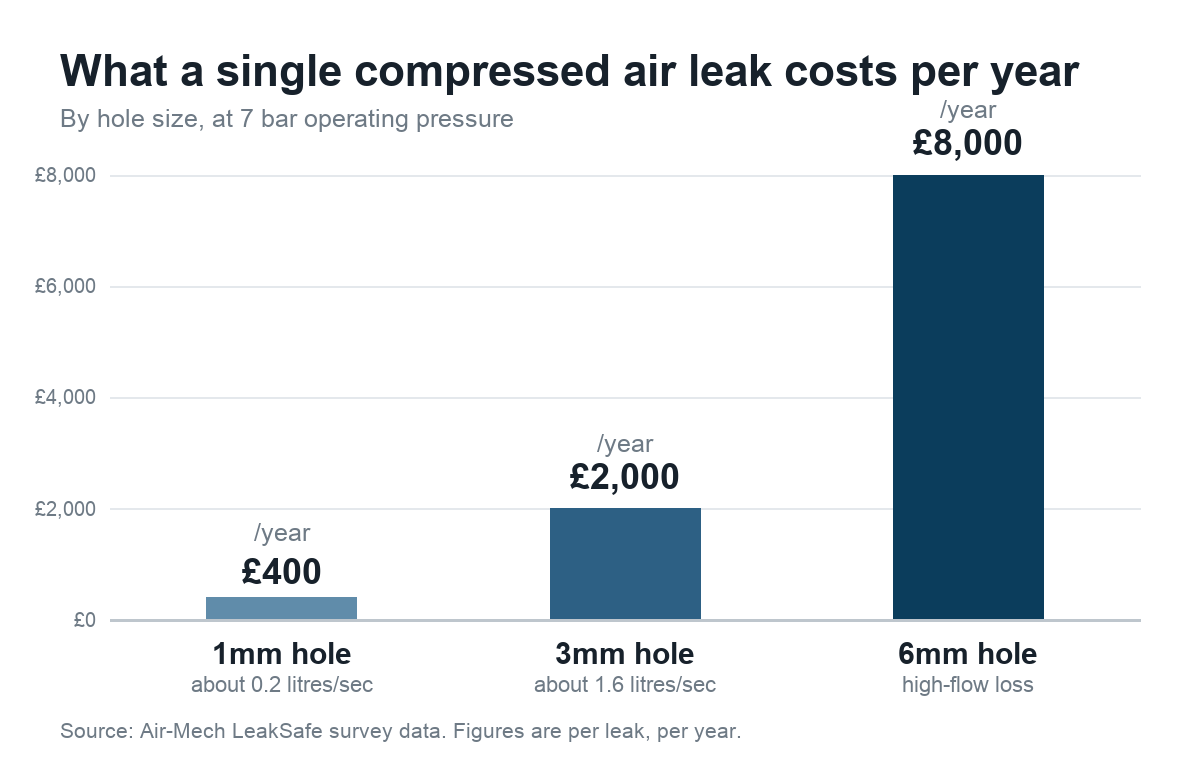
- A 1mm leak at 7 bar wastes about 0.2 litres of air a second. That costs around £400 a year.
- A 3mm leak wastes about 1.6 litres a second. That costs over £2,000 a year.
- A 6mm leak can cost upwards of £8,000 a year.
Those figures come from Airmech survey data. One factory can have dozens of leaks at once.
Signs you have a compressed air leak
You do not need special kit to suspect a problem. Watch for these four signs.
Your compressor never seems to switch off
A healthy system loads and unloads as demand changes. If your compressor runs flat out even when no one is using air, something downstream is bleeding it dry. Leaks are the usual cause.
Your energy bill keeps climbing
If your air demand has not changed but the bill keeps rising, leaks are a strong suspect. You can put a rough number on the waste with the compressed air usage calculator before you call anyone.
You hear a faint hiss when the plant is quiet
Walk the line at the end of a shift, when the machines stop. A steady hiss near a joint, valve, or fitting is a leak you can hear. The ones you cannot hear are the bigger worry.
Pressure drops at the far end of the line
If tools at the end of the system run weak, leaks along the way may be stealing the pressure. Turning the compressor up to fix it just burns more energy.
Why your ears are not enough
Here is the catch. Most leaks are too quiet, too high-pitched, or too far away to hear, especially with machinery running. You will find the loud ones and miss the rest.
That is where ultrasonic air leak detection comes in. A leak makes a high-frequency sound, above what people can hear. An ultrasonic detector picks that sound up and turns it into something an engineer can hear and measure. They sweep the tool along the pipework, find each leak, and tag it, even in a noisy plant.
This is the difference between guessing and knowing. You stop chasing the obvious leaks and start fixing the ones that cost the most.
What a good compressed air leak survey looks like
A proper survey does more than point at leaks. It should give you:
- A check of your whole distribution system, not just the easy spots.
- Every leak tagged and logged, with its location.
- A size and a yearly cost for each leak.
- A repair list ranked by payback, so you fix the costly ones first.
Airmech’s LeakSafe survey works this way. Engineers use industrial ultrasonic equipment to survey the full system, then hand you a costed, ranked list. The survey fee is credited against any repair work completed within 60 days, so the audit pays for itself when you act on it.
The point is simple. You cannot fix what you cannot measure. A survey turns an invisible problem into a clear job list.
What to do once you find the leaks
Finding leaks is step one. Fixing them is where the savings land.
- Fix the biggest first. Your ranked list shows which leaks waste the most money. Start at the top.
- Re-check after repairs. A follow-up survey confirms the fix and catches anything missed.
- Make it a routine. Leaks come back as seals age and joints loosen. A regular survey keeps the waste down for good.
This is the same discipline behind Airmech’s multi-site work. One national warehouse operator cut compressor faults by 43% across their UK estate by treating maintenance as a routine, not a one-off.
The bottom line
Compressed air leaks are quiet, constant, and costly. Up to a third of your compressed air budget could be leaking out right now. The good news: leaks are easy to find with the right kit, and most repairs pay for themselves fast.
Want to know what your leaks are costing? Book a LeakSafe survey with Airmech and get a costed, ranked list of every leak on your site.