
Table of Contents
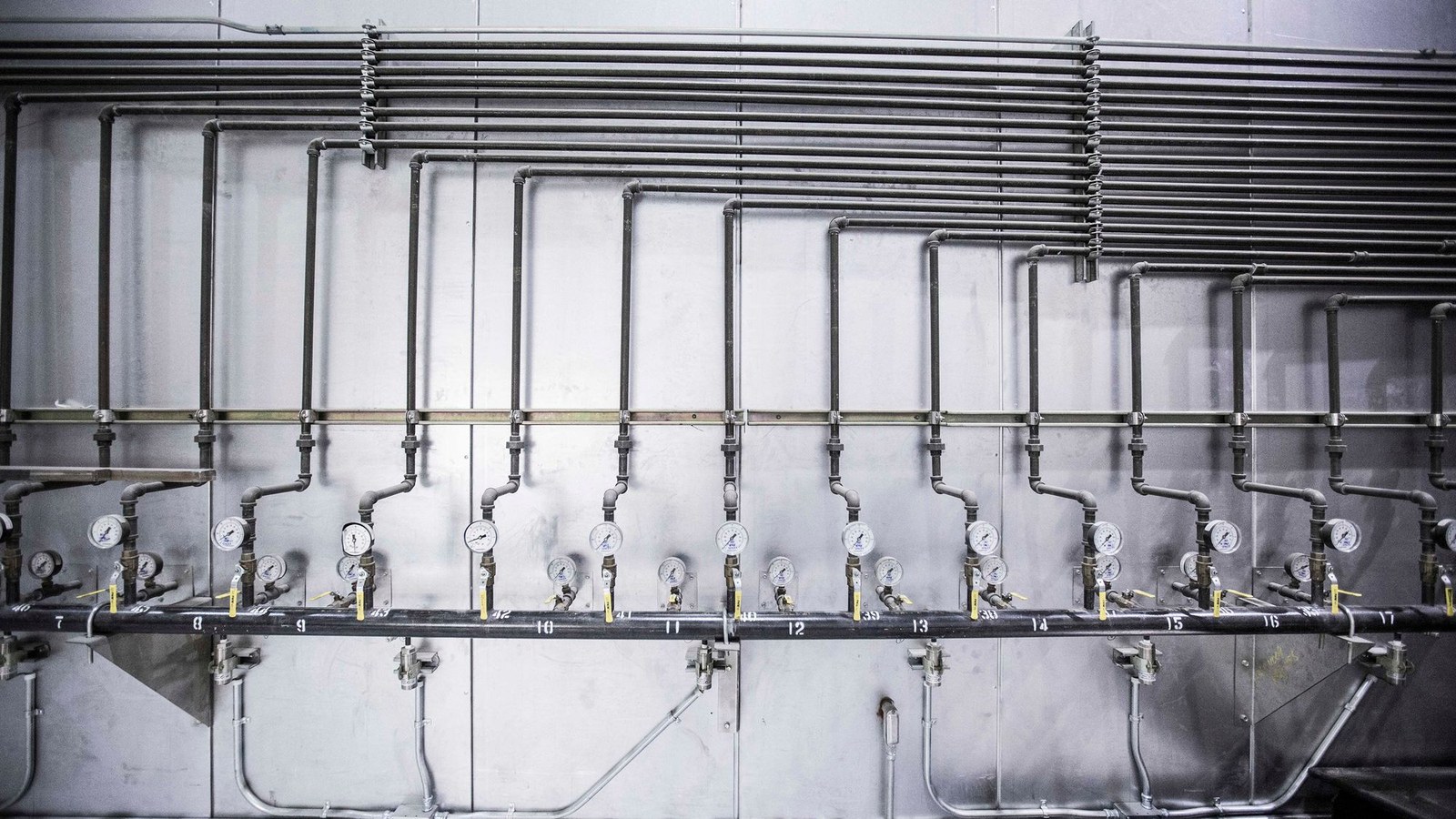
Your compressor works hard all day. But by the time the air reaches your tools, it has lost some of its push. That loss is called compressed air pressure drop. It is one of the most common faults in a UK plant, and one of the most expensive. Worse, most sites never measure it. This guide explains what compressed air pressure drop is, why it costs you money, and how to measure it in an afternoon.
What is compressed air pressure drop?
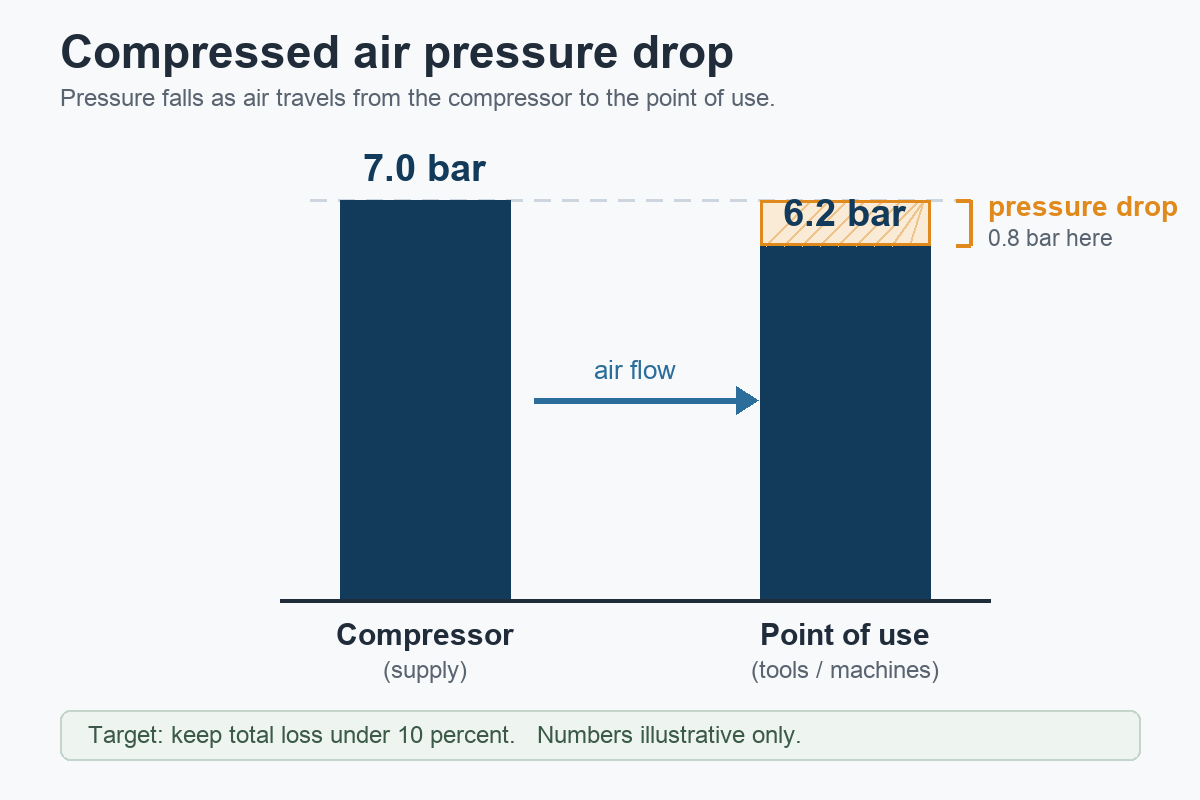
Your compressor sends air out at a set pressure. Say 7 bar. By the time that air travels through the pipes, filters, and dryers to reach a machine on the far side of the plant, the pressure is lower. The gap between the two numbers is your pressure drop.
It is measured in bar or psi. A small drop is normal. A big drop is a warning sign. It means your system is fighting itself.
Why pressure drop costs you money
When tools run short of pressure, people do the obvious thing. They turn the compressor up.
That fix is where the money leaks away. Higher pressure means higher energy use. As a rule of thumb, for a system near 7 bar (about 100 psi), every 2 psi (roughly 0.14 bar) you add to the discharge pressure raises energy use by about 1 percent (source: Improving Compressed Air System Performance, US DOE / Compressed Air Challenge).
Do the maths. If you crank the compressor up by 1 bar (about 14 psi) to beat a pressure drop, you can burn around 7 percent more energy. Every hour. Every day. On a big compressor, that adds up fast. And compressed air is already one of the most costly forms of energy on a site.
What causes compressed air pressure drop
Pressure drop is not one problem. It is usually a few small ones stacked up.
Undersized or long pipework
Thin pipes and long runs choke the flow. The air has to squeeze through, and it loses pressure on the way. Adding new machines to an old pipe layout is a common trigger.
Dirty filters and dryers
Filters and dryers clean and dry the air. Over time they clog. A blocked filter can quietly eat a chunk of your pressure. Many sites only change filters when something breaks, which is far too late.
Air leaks
Leaks bleed pressure out of the whole system. Airmech’s ultrasonic surveys typically find 20 to 30 percent of air lost to leaks. That is a big, cheap win hiding in plain sight.
Too many bends, tees, and fittings
Every sharp bend, tee, and quick-connect fitting adds resistance. A tangled layout drops more pressure than a clean, well-planned one.
How to measure compressed air pressure drop
You do not need a specialist to get a first reading. You need two gauges and one busy shift.
- Read the pressure at the compressor. Use the discharge gauge on the unit.
- Fit a gauge at the point of use furthest from the compressor. This is usually where the drop is worst.
- Run the plant at a normal busy time, when demand is high.
- Subtract the far number from the compressor number. That gap is your pressure drop.
- Compare it to the target. A well-designed system should lose less than 10 percent of the discharge pressure from the compressor to the point of use (source: US DOE / Compressed Air Challenge).
Here is a quick example. If the compressor reads 7 bar, your total loss should stay under about 0.7 bar. If it is more, you have money to save.
What good practice looks like
Once you know your number, the fixes are practical.
- Size your pipework for the real flow. Get the pipework and installation right and half the problem goes away.
- Fix leaks first. It is the cheapest win, so start there.
- Change filters and service dryers on a schedule, not when they fail. See these compressor energy efficiency tips.
- Know your true air demand before you buy more compressor. Our compressed air usage calculator helps you check.
Small, steady steps beat one big spend. And every point of pressure you stop wasting comes straight off the energy bill.
The bottom line
Compressed air pressure drop is invisible until you measure it. Once you do, the savings are real and quick. You stop paying to push air through a system that is working against you.
Not sure where yours is leaking pressure? Our engineers can find it for you.