
Table of Contents
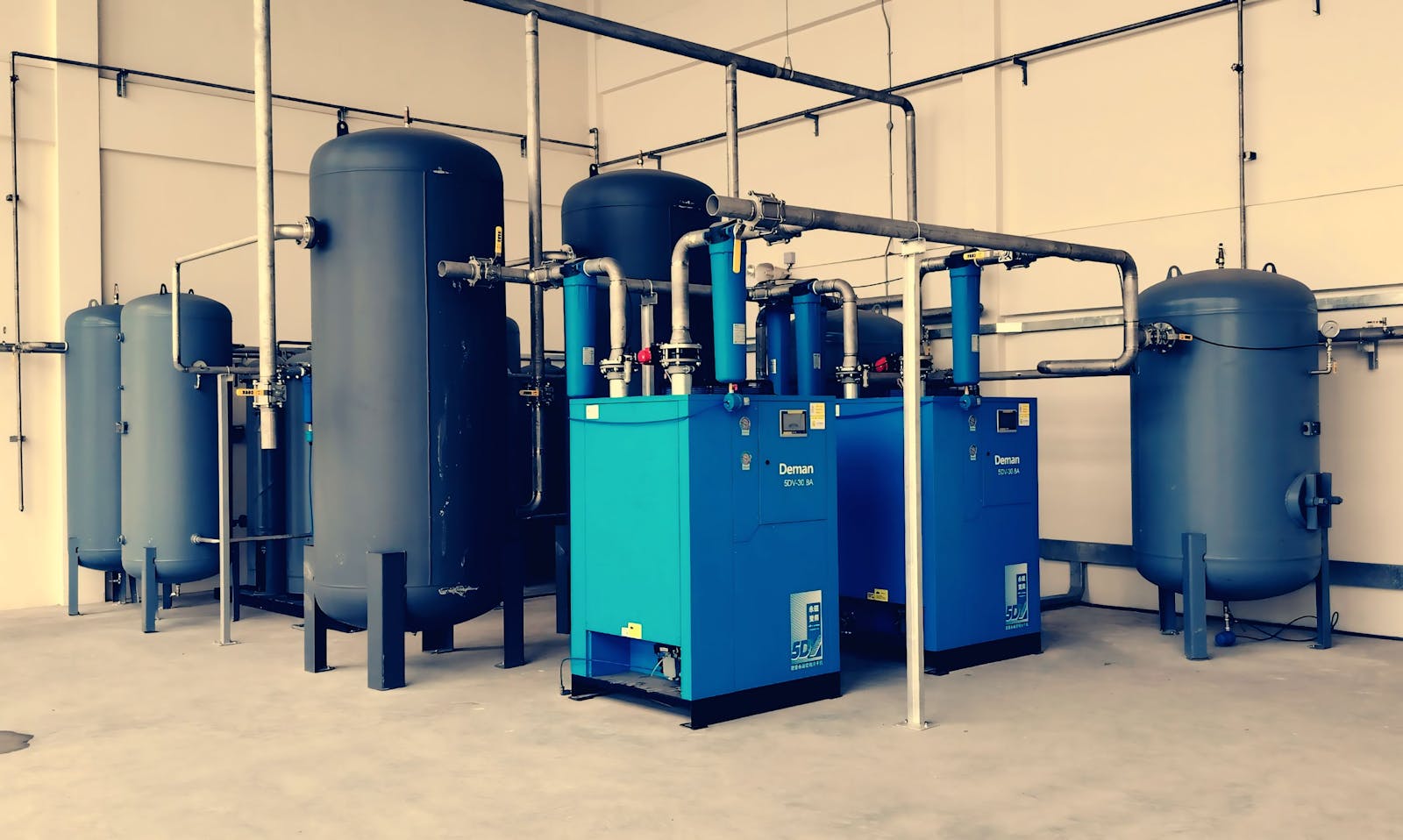
You cannot see the air coming out of your compressor. So it is easy to assume it is clean.
But that air often touches your product. It blows out bottles before filling. It moves powder and packaging. It dries food. In a dental surgery, it goes near a patient’s mouth. If that air carries oil, water, or tiny particles, it lands on the thing you sell. And you may never know until a customer complains.
Compressed air testing tells you what is really in the air. It turns a guess into a number you can prove. This post explains what the test checks, who needs it, what it costs to skip it, and how Airmech runs one.
What compressed air testing actually checks
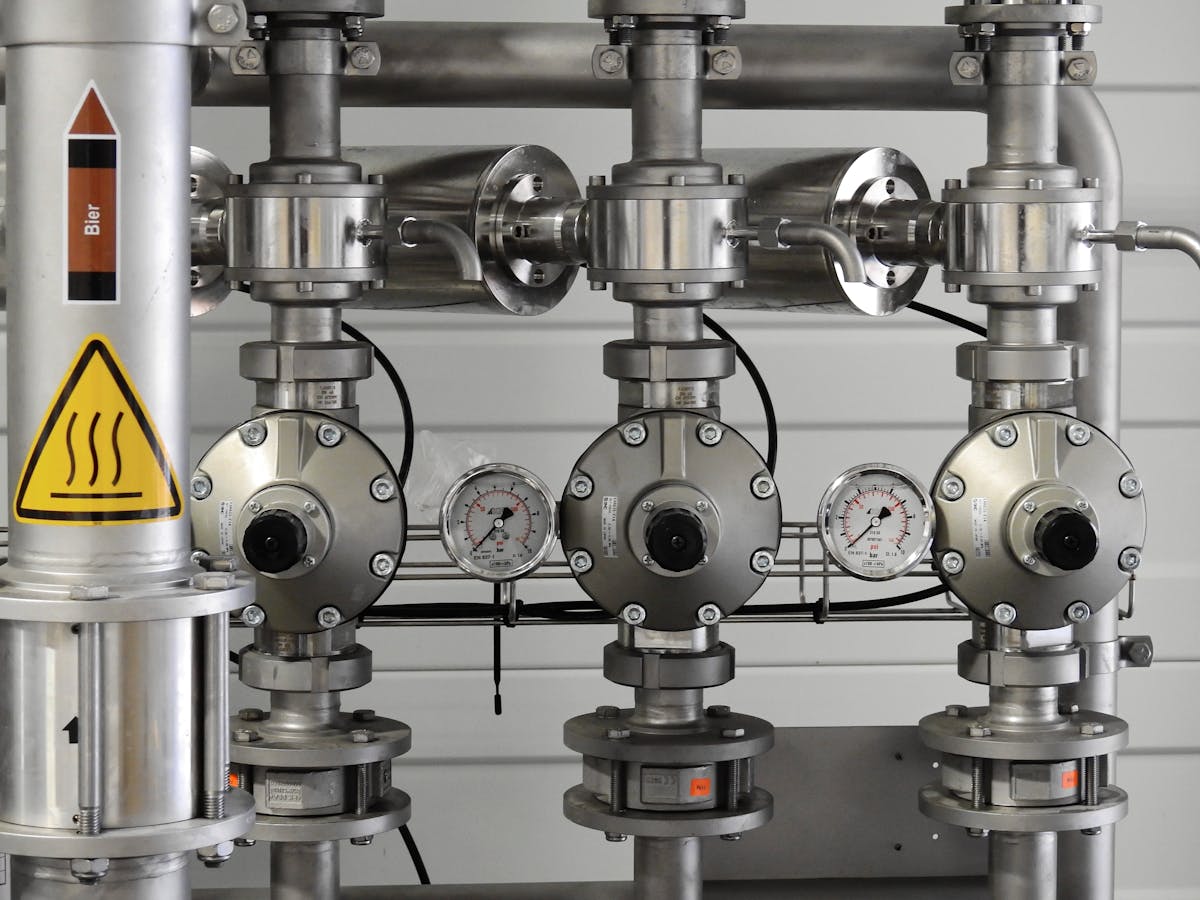
An Airmech air quality test measures your air against BS EN 12021, the standard for breathable compressed air. Every parameter gets a measured value and a pass or fail, and you get a certificate for each point tested.
ISO 8573-1 is a different standard. It sorts compressed air into purity classes, from Class 0 (the cleanest, oil-free) through to Class 5, and it is the right way to describe the air quality a process needs. We use it when we specify your treatment and when we check your filtration is rated correctly. We do not test or certify against it, because classifying air to ISO 8573-1 needs a laser particle counter under ISO 8573-4 and we do not carry one.
Here are the three things that spoil air, and what we do about each.
Particles
These are tiny bits of dust, rust, and worn metal. A human hair is about 70 micron wide, so these are far too small to see. They scratch surfaces and block fine nozzles.
Counting them is a separate discipline with its own standard and its own instrument. We do not do it. What we do instead is verify your installed filtration: our engineer checks that the filters on the line are rated to the class your application requires and that they are performing. If your specification calls for a measured particle count, say so when you enquire and we will either bring in a specialist for that element or point you to someone who does it.
Water
Compressed air holds water. As it cools, that water drops out as liquid. The test measures the pressure dewpoint in degrees Celsius. A high dewpoint means wet air. Wet air rusts pipes, ruins paint finishes, and grows bacteria.
Oil
Most compressors use oil to run. Some of it carries into the air as a fine mist. The test measures the residual oil content in milligrams per cubic metre. Oil in the air ruins food, spoils coatings, and fails audits. Our oil measurement is carried out on site rather than in a laboratory.
If your air feeds breathing apparatus, the test goes further. It checks the levels set by BS EN 12021: oxygen between 19.5 and 23.5%, carbon monoxide below 5 mg per cubic metre, carbon dioxide below 500 mg per cubic metre, and oil mist below 0.5 mg per cubic metre.
Who needs compressed air testing
Some plants can live with rough air. Many cannot.
You need testing if your air touches the product or the person. That means:
- Food and drink. Air dries, moves, and packs your product. Dirty air is a contamination risk.
- Pharmaceutical. Audits expect proof. A number on a report is that proof.
- Dental and healthcare. Air goes near patients. Quality is not optional.
- Brewery and craft drinks. Off flavours often trace back to the air.
- Print, paint, and coatings. Oil and water wreck a finish.
If you are a Quality Manager, a Technical Manager, or a site lead in one of these sectors, this is your job to get right. A test gives you the paperwork to show an auditor, a customer, or your own board.
If you make food or drink
For food and beverage production, BCAS Best Practice Guideline 102 recommends ISO 8573-1 class 2.2.1 for air in direct contact with product and class 2.4.2 for indirect contact, verified at least twice a year. Tell us which of the two applies to your line and we will tell you what we can evidence against it and what we cannot. Airmech sits on the BCAS Distributor Committee.
What it costs you to skip it
Skipping the test feels cheaper. It is not. Here is what bad air really costs.
Rejected product. One contaminated batch can be thrown away. The waste, the rework, and the lost time add up fast.
A failed audit. Big buyers ask for air quality data. No data can mean no contract.
A recall. If bad product reaches a customer, you may have to pull it back. That hits your money and your name.
A safety breach. Under COSHH rules, you must control what people breathe. Untested breathing air is a legal risk, not just a quality one.
The test is a small, known cost. The problems above are large and hard to predict. That is the trade.
How Airmech runs a compressed air test
We keep it simple and we do not stop your line.
- We talk first. We ask what your air does and which class you need. Food air and breathing air have different targets.
- We test at the point of use. We measure the air where it matters, not just at the compressor. That is the air your product actually meets.
- We measure to BS EN 12021. Carbon monoxide, carbon dioxide, oxygen, oil content, water content converted to a pressure dewpoint, airline flow and pressure, and an odour check. We verify your filtration against the class you need rather than counting particles.
- We give you a clear report. You get a certificate for each point tested, showing the measured values against the standard with a pass or fail on every parameter. We report any non-conformance with our recommendation.
- We fix what fails. If the air is dirty, our air treatment team sorts the filters and dryers so you pass.
We have made more than 100,000 service visits in 45 years. We test, we explain, and we sort the fix under one roof. You do not need three companies for one clean-air job.
What we do not do
We do not count particles, and we do not test for microbiological contamination. Our oil measurement is carried out on site rather than in a laboratory. Where your specification calls for any of those, say so when you enquire and we will tell you plainly whether we can help, bring in a specialist for that element, or point you to someone who does it. We would rather lose a job at enquiry stage than have a gap turn up when your certificate is audited.
Stop guessing about your air
Clean air is not luck. It is something you measure and prove. A compressed air test takes the guesswork out and hands you the data your customers and auditors want.
Book a compressed air quality test with Airmech. Call 024 7634 5658 or request a test on our compressed air testing page.