

Compressed Air Energy Audits
Find out exactly where your compressed air energy goes. Data logging, leak survey, and full system analysis. Costed recommendations with payback periods, not opinions.
Compressed Air Is Probably Your Most Expensive Utility
Compressed air is one of the most expensive utilities on an industrial site. Carbon Trust research from 2012 put compressed air at around 10% of all the electricity used by UK industry. On your own site, not all of the air you pay to make reaches the tools. The rest is lost to heat, leaks, pressure drops, and inefficient controls.
Most sites have never had an energy audit on their compressed air system. The compressors run, the bill gets paid, and nobody questions whether a system sized ten years ago still matches today's demand. Oversized machines running at part load, leaks that lose 20% or more of output, pressure set higher than any tool actually needs, and dryers and filters adding unnecessary pressure drop.
Without measurement, you are guessing. And guessing costs money every hour the compressors run.
Measurement First, Recommendations Second
We install data loggers on every compressor and measure actual air demand, power consumption, system pressure, and duty cycles over a minimum 7 day period covering full production patterns. This gives us the real picture, not a snapshot taken during a quiet afternoon.
A full leak survey uses ultrasonic detection equipment to locate and tag every leak in your distribution pipework, hoses, couplings, and point of use equipment. Each leak is quantified in litres per second and converted to an annual energy cost so you can prioritise repairs by payback.
The audit report is delivered within 48 hours and includes a system schematic, measured demand profile, energy consumption breakdown, leak register with locations and costs, and a prioritised list of recommendations. Each recommendation includes estimated savings, implementation cost, and simple payback period. We separate quick wins (weeks) from capital projects (months) so you can start saving immediately.
We are brand-agnostic. If the data shows your existing equipment is the right size and type, we say so. If it shows a competitor's machine is the best fit, we say that too. The audit is about your energy bill, not our sales targets.
System Survey
We walk the site and document every compressor, dryer, filter, receiver, and distribution run. Machine nameplates, control settings, pipework sizes, and point of use connections all recorded.
Data Logging
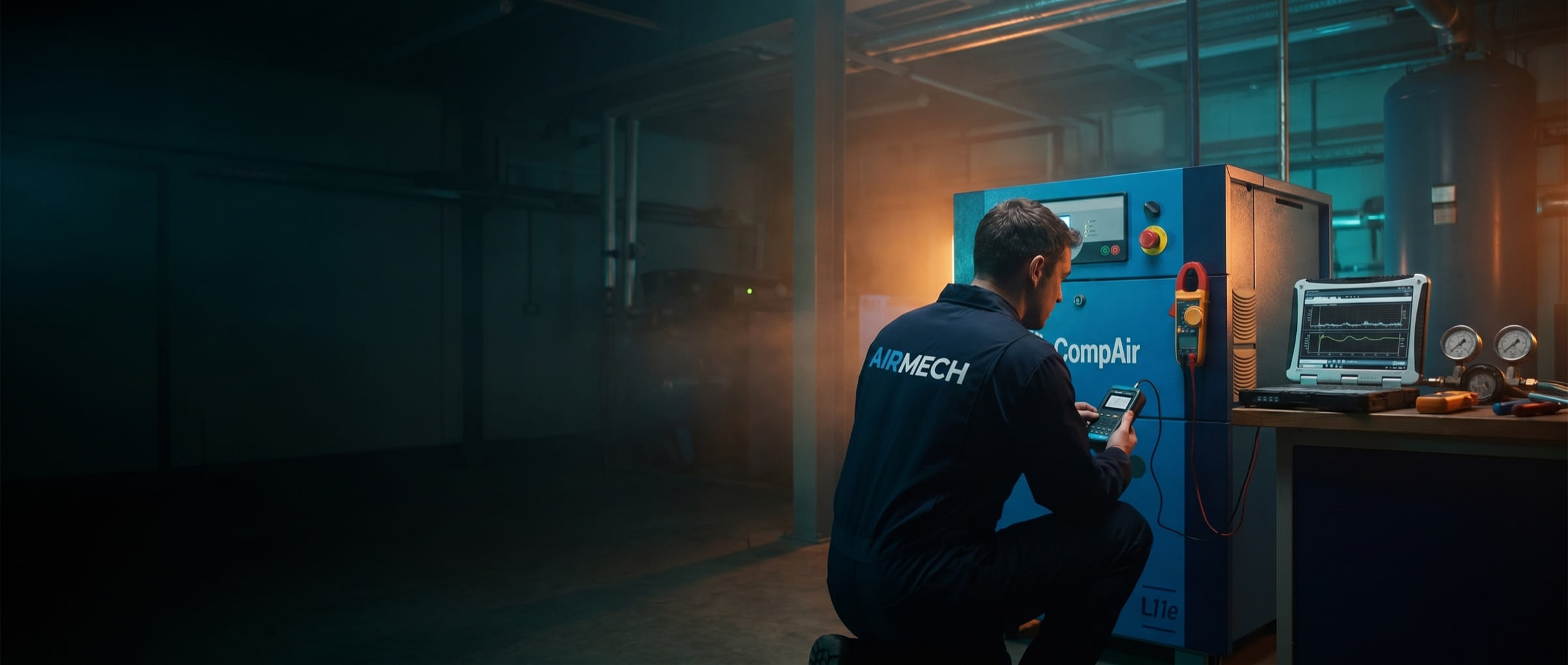
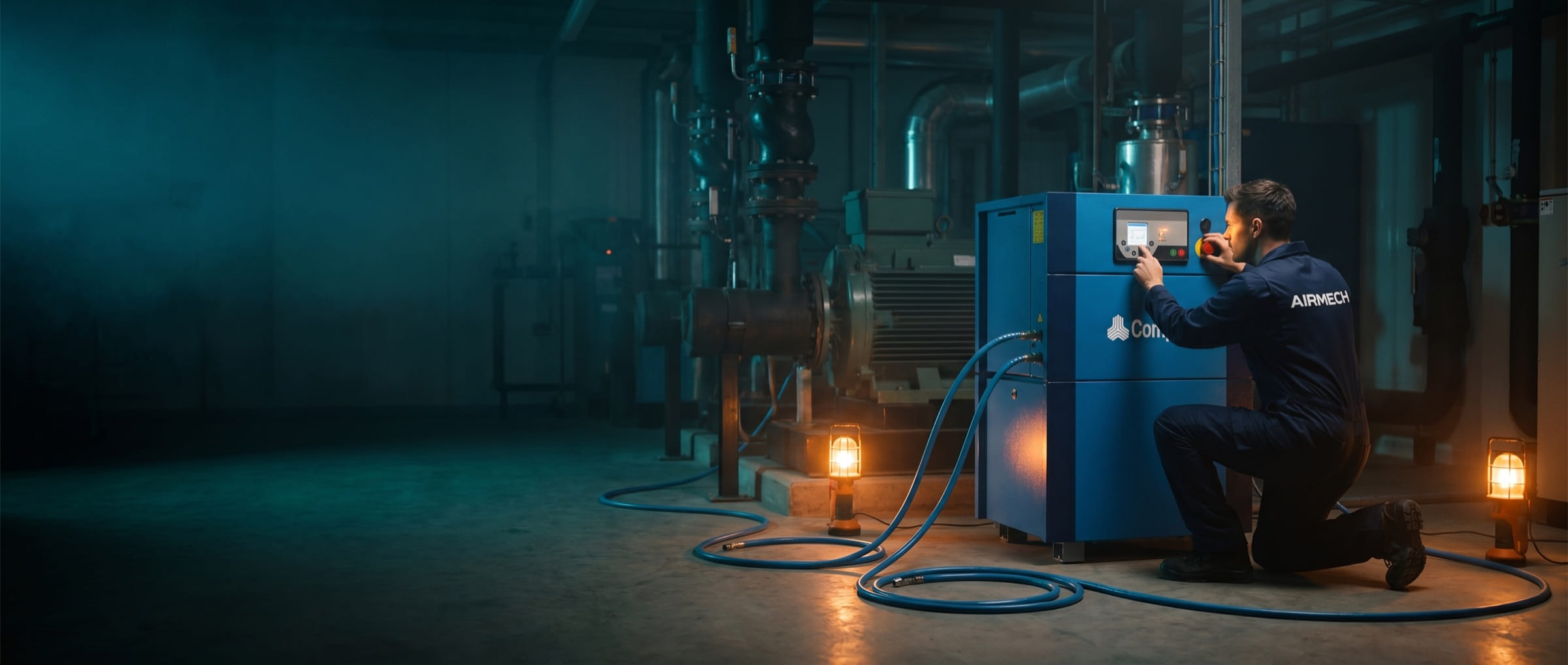
Loggers installed on every compressor for a minimum of 7 days. Power consumption, system pressure, load/unload cycles, and ambient conditions recorded at 1 second intervals.
Leak Survey
Ultrasonic leak detection across the entire distribution system. Every leak tagged, photographed, and quantified in litres per second with an annualised energy cost.
Report and Recommendations
Full audit report within 48 hours. Demand profile, energy breakdown, leak register, and prioritised recommendations with estimated savings, costs, and payback periods for each action.
Frequently Asked Questions
How long does an energy audit take?
The initial site survey takes half a day for a typical single compressor installation, or a full day for larger multi-compressor systems. Data loggers remain installed for a minimum of 7 days to capture full production patterns including weekends and shift changes. The leak survey runs alongside normal production with no interruption to operations. You receive the full audit report within 48 hours of logger removal.
What does a compressed air energy audit cost?
Audit pricing depends on the number of compressors and the complexity of the distribution system. A single compressor site with straightforward pipework typically costs between £800 and £1,500. Multi-compressor installations and multi-site audits are quoted individually. The audit cost is typically recovered many times over from the savings identified. We can provide a fixed quote after an initial phone consultation.
Will the audit disrupt production?
No. Data loggers are clamp-on devices that attach to power cables and pressure lines without any interruption to the compressed air supply. The leak survey uses ultrasonic detection equipment that works during normal production. No shutdown or isolation is required at any point during the audit.
What happens after the audit?
You receive a prioritised action list. Quick wins like leak repairs and pressure adjustments can often be implemented immediately by your own maintenance team or by our engineers. Larger recommendations like compressor replacements, VSD retrofits, or pipework upgrades come with full costings and payback periods so you can build a business case. We can implement any or all of the recommendations, but there is no obligation to use us for the remedial work.





Find Out What Your Compressed Air Really Costs
One call. We scope the audit, install the loggers, and give you the numbers. No obligation to act on the recommendations.